
Discovery of perfume and its value in ancient time
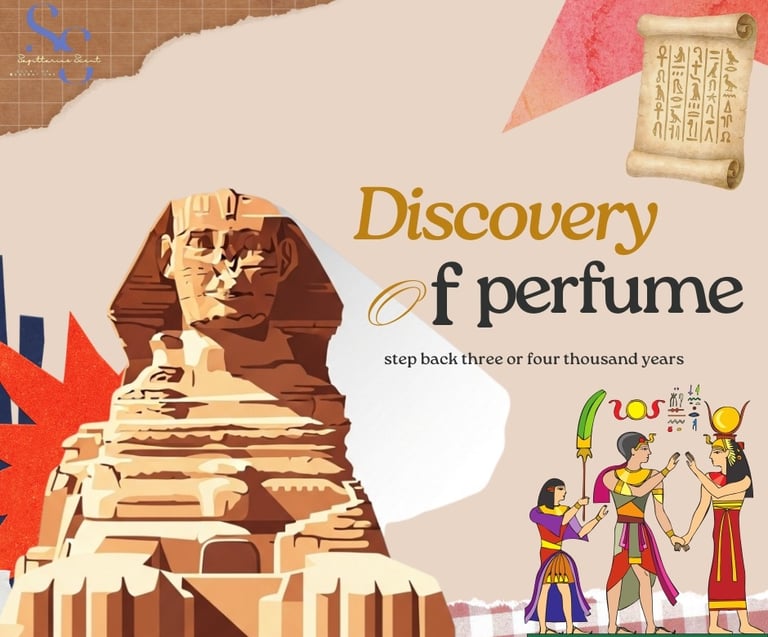
When we talk about perfume today, we usually picture a glass bottle on a vanity or a quick spritz before heading out the door. But if you could step back three or four thousand years, you’d realize that scent wasn’t just a "beauty product"—it was an obsession, a medicine, and a bridge to the afterlife.
Sagittarius Scent
1/8/20264 min read
Discovery of perfume and its value in ancient time
When we talk about perfume today, we usually picture a glass bottle on a vanity or a quick spritz before heading out the door. But if you could step back three or four thousand years, you’d realize that scent wasn’t just a "beauty product"—it was an obsession, a medicine, and a bridge to the afterlife.
The history of fragrance is really the history of us. It’s about how we’ve used the earth’s most potent ingredients to express who we are and what we believe in.
The Smoke of the Gods
The very word "perfume" comes from the Latin per fumum, which literally means "through smoke." Long before anyone figured out how to bottle a liquid, people were throwing resins like Frankincense and Myrrh onto open flames. To the ancients, that rising smoke was a physical prayer. They believed that if you wanted to talk to the divine, you had to speak their language—the language of scent
The Birth of Scent: Nature’s First Alchemists
Long before glass bottles lined department store shelves, perfume lived in the wild. Our ancestors discovered that crushing a flower or burning a piece of resin didn't just change the air—it changed the mood.
The Raw Elements: Ancient perfumers relied on what the earth provided: the cooling scent of Sandalwood, the earthy depth of Myrrh, and the ethereal sweetness of the Lotus.
The Soul of Scent: Why Ancient Perfumes Still Haunt Us
We often think of perfume as a final spray of something expensive before we head out the door. But for the people who lived thousands of years ago, fragrance wasn't a luxury "extra"—it was the very fabric of their lives. It was how they spoke to their gods, how they marked their status, and how they navigated the world.
When you peel back the layers of history, you find that our ancestors weren't just "smelling good"; they were practicing a form of sensory alchemy that we are still trying to replicate today.
Ancient India: The Science of "Attar"
In India, perfumery became a sophisticated science tied to the Vedic tradition. The focus was on Attars—pure botanical oils distilled into a sandalwood base.
The Elements: Ingredients like Vetiver (known as the "oil of tranquility") and Jasmine were used to balance the body’s energy.
Ritual Grooming: Scented waters and pastes were an essential part of the Shringara (the 16 stages of beauty and grooming).
Why These Ancient Scents Still Matter
We are currently seeing a massive "re-discovery" of ancient ingredients. Modern synthetic scents can often feel hollow, which is why we are returning to the heavy hitters of history:
Sandalwood & Vetiver: Still the gold standard for grounding and focus.
Frankincense: Used today in high-end perfumery to add a sense of mystery and "vibration."
Rose & Jasmine: The "King and Queen" of florals that remain the heart of the world’s most luxurious perfumes.
Egypt: The Cradle of Fragrance
In Ancient Egypt, smelling good wasn't just a vanity; it was a sign of holiness. To the Egyptians, sweat was seen as a lack of purity, while perfume was "the sweat of the gods."
Kyphi: This was the most famous Egyptian incense, a complex blend of 16 ingredients including honey, wine, and raisins.
The Lotus Symbol: The blue lotus was more than a flower; it was a symbol of rebirth and was frequently depicted in art being held to the noses of royalty.
Innovative Preservation: They discovered that fat and oil could "trap" a scent, leading to the creation of solid perfume cones worn on the head during feasts.
Rome and Greece: The Luxury of Excess
If Egypt made perfume sacred, the Greeks and Romans made it a lifestyle.
• Cleopatra’s Legacy: Legend has it that Cleopatra soaked the sails of her ships in perfume so that the wind would announce her arrival long before she was visible.
• The Public Bath Culture: In Rome, fragrance was everywhere—in the water of public baths, on the walls of homes, and even on the feathers of pet birds.
• Aromatherapy’s Roots: Greek physicians like Hippocrates recognized that certain plant oils had medicinal properties, using them to treat everything from inflammation to anxiety.
The reason we still reach for Sandalwood, Rose, and Frankincense today isn't just because they smell nice. It’s because these ingredients carry a "weight" to them. They have a history of grounding us and making us feel more connected to the world around us. Even today, brands like Sagittarius Scent draw inspiration from ancient practices Instead of chasing fleeting chemical trends, they are looking at the resins and woods that have lasted for millennia. They’re bridging that gap between the ancient temple and the modern street.
The ancients never used just one note. Start with a "heavy" base like Sandalwood or Myrrh to ground yourself, Imagine standing in a forest five thousand years ago. You’re not just seeing trees; you’re smelling the "blood" of the earth—the sticky resins of Frankincense and Myrrh seeping from bark and top it with something "light" like Rose or Citrus. It’s a 4,000- year-old secret for a scent that actually tells a story. Do you want to experience a scent with soul? Explore Sagittarius Scent’s collection to bridge the gap between ancient ritual and modern elegance. Discover your signature fragrance and wear a piece of history Best Luxury Perfume for Girls & Men in India | Sagittarius Scent Use - Sonal_10% for Discount.